

Platform
One control plane for the whole agent lifecycle
Everything below runs inside your own tenant. Design agents, attach the policy they must obey, validate them against real work, promote them to production, and keep a replayable record of everything they did.
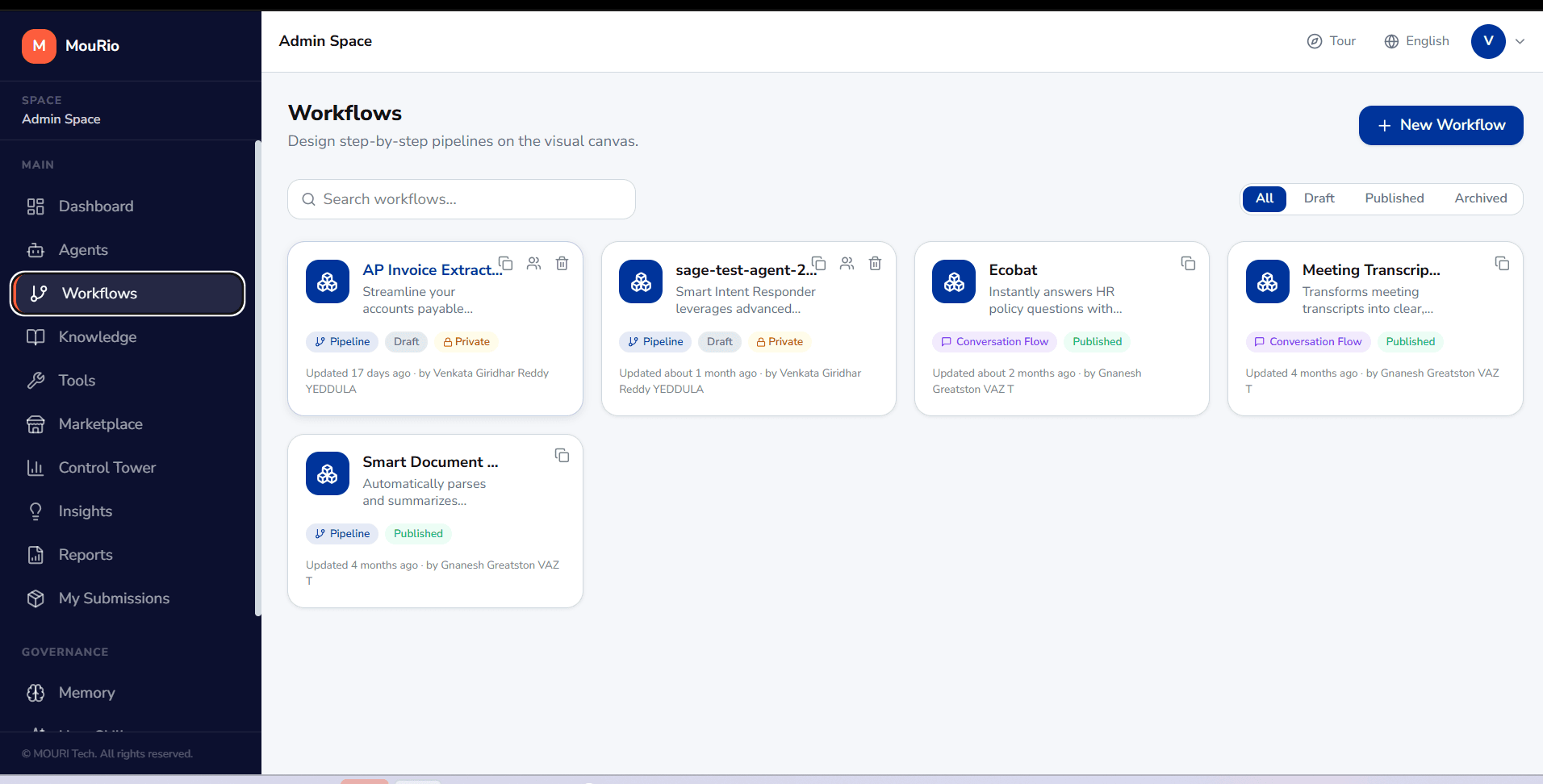
Agent Studio
Design agents and multi-step workflows visually.
A visual canvas for composing agents: model calls, retrieval, tool invocations, branching logic, loops and human checkpoints. Reusable components mean the second process is faster than the first, and process owners can build while engineering reviews, rather than having to translate requirements into workflows.
- Visual DAG editor with 18+ node types
- Reusable components and workflow templates
- Promote a validated agent to production in one controlled action
- Version history with the ability to diff and roll back
A workflow on the canvas. Each node is a typed step — an API call, a condition that branches, a script, a notification — and the toolbar carries the whole lifecycle: save, publish, review, and run.
Policy & Guardrails
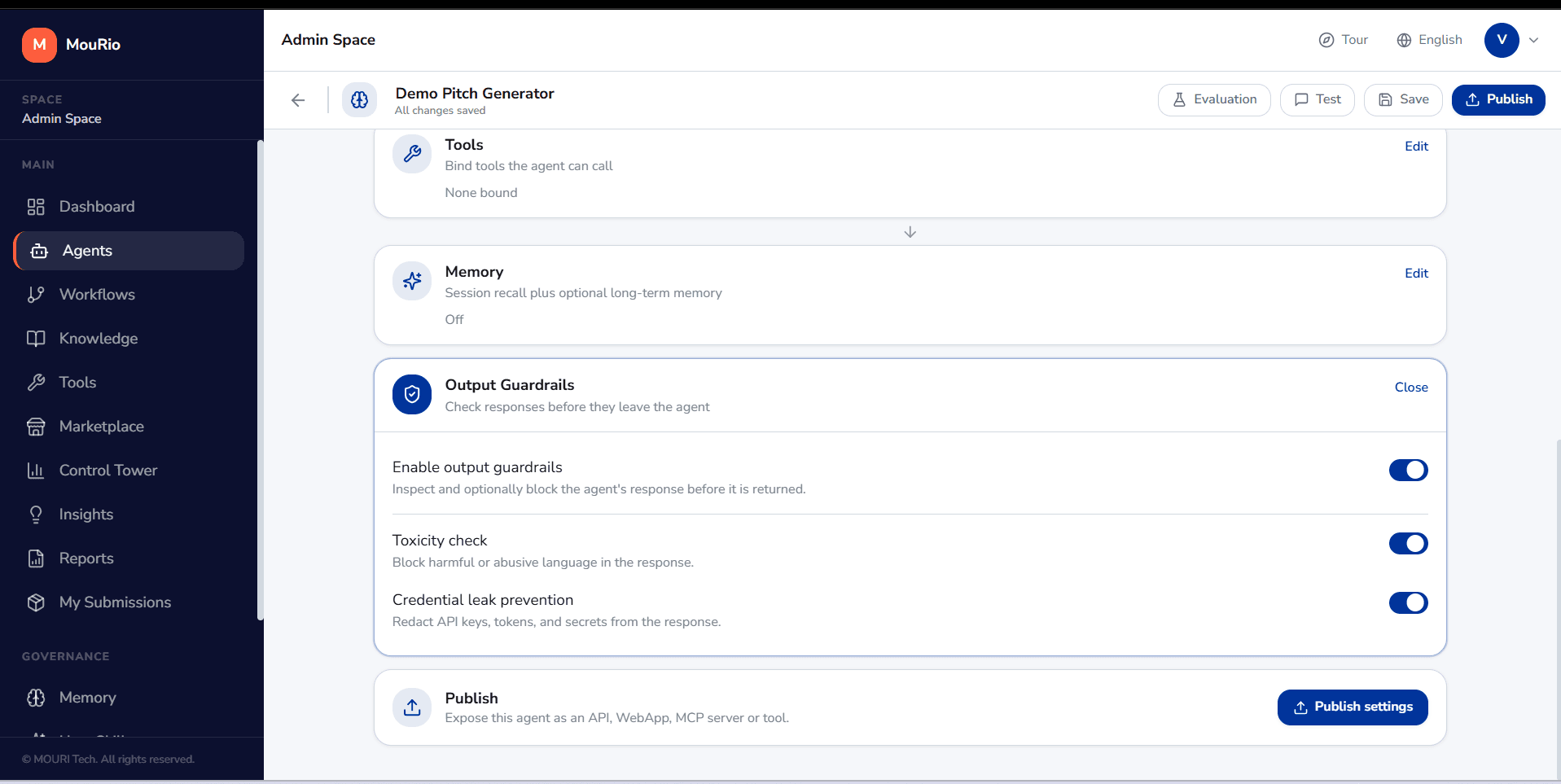
Enforced before the action runs, not audited after it.
Each agent carries a policy pack describing which tools it may call, what limits apply, and which actions need a named human approver. Every action is checked against it at execution time — so behaviour holds regardless of what the model attempts.
- Per-agent tool allow-lists
- Approval gates with named approvers and escalation routing
- Value and rate limits on sensitive actions
- Policy evaluation recorded in the run's audit trail
AI Control Tower
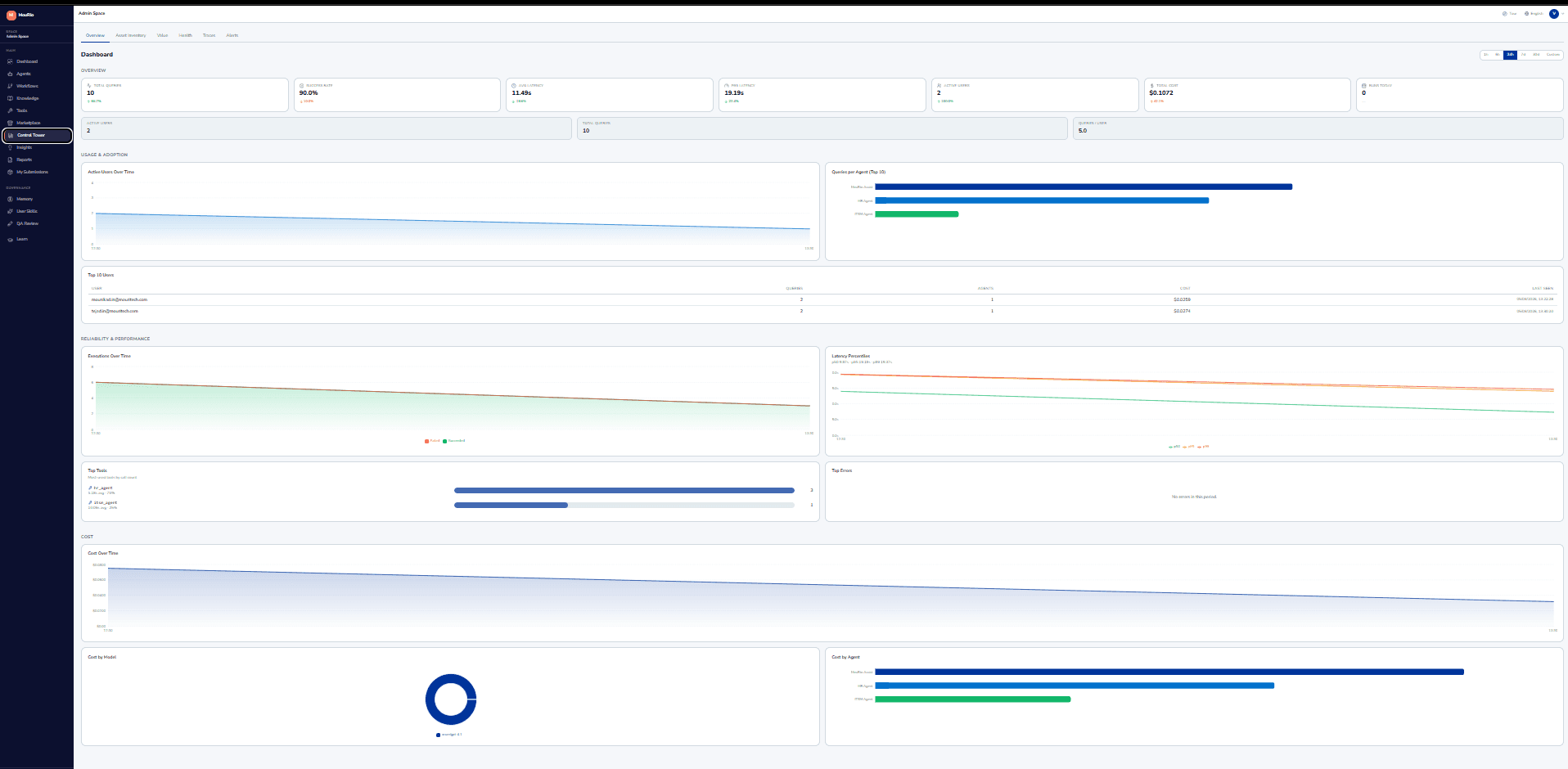
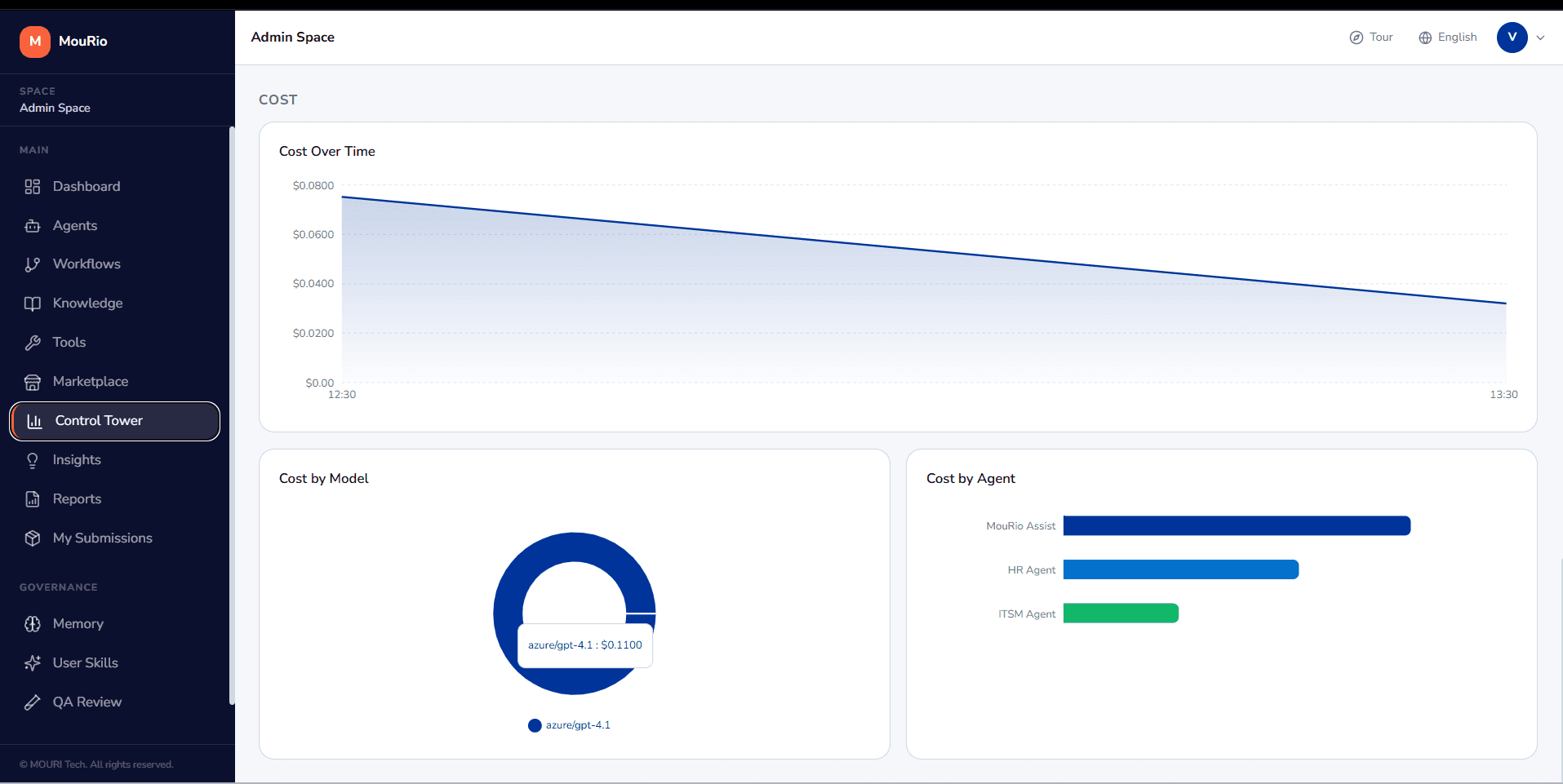
Every agent, run, escalation and cost in one view.
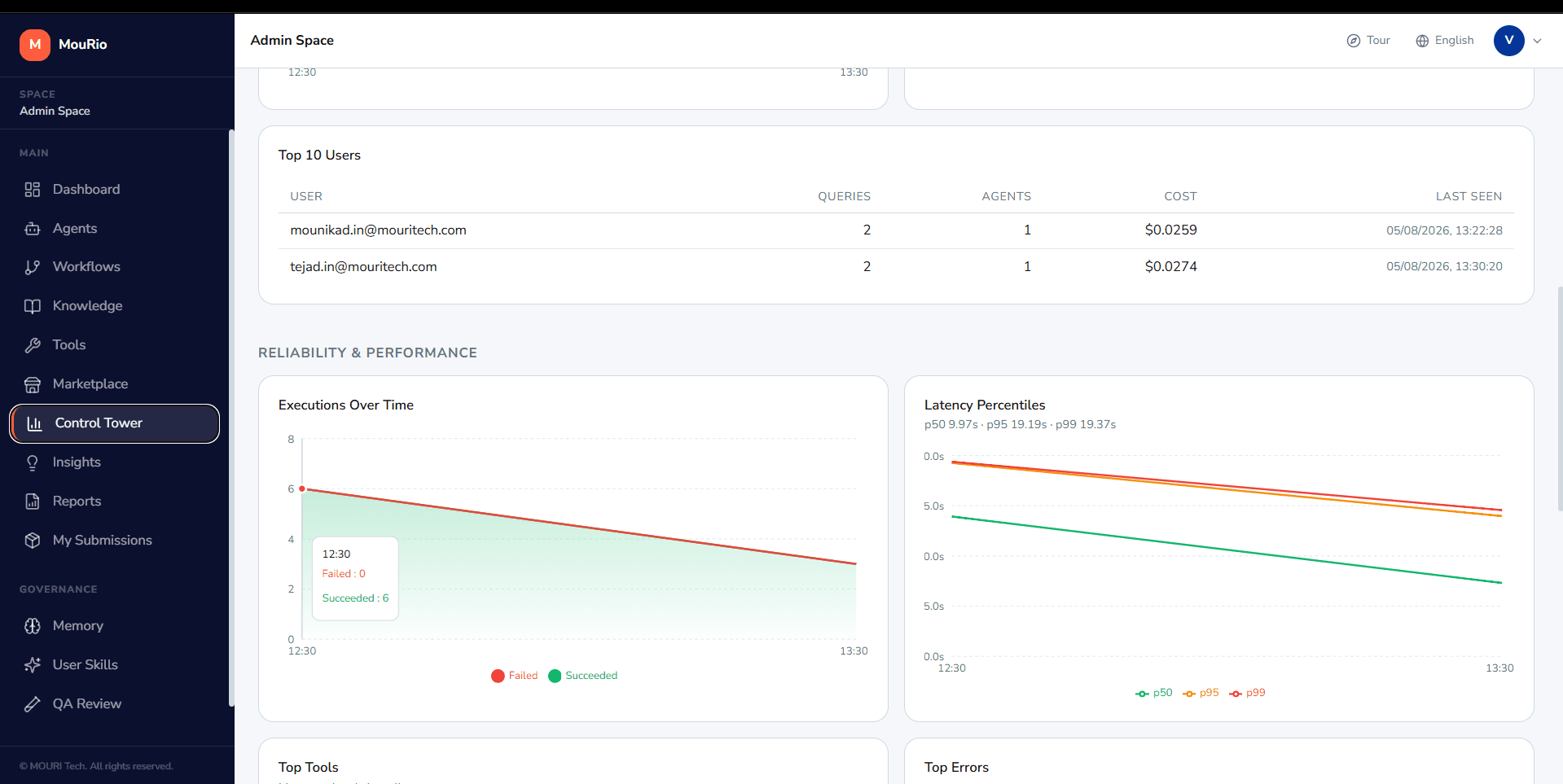
A governed registry of everything in production: who owns each agent, which version is live, which policy pack applies, and its lifecycle status. Alongside it, operational telemetry — failure rates, latency, cost per agent, and the escalations waiting on a human.
- Agent registry with owner, version and lifecycle status
- Cost and token attribution per agent and per run
- Failing-node analysis and quality feedback
- Alerting on policy violations and escalation backlogs
The fleet view. Volume, success rate, latency percentiles and spend across every agent, filterable by space, creator or app — so cost and reliability are answerable per team rather than in aggregate.
Replay & Evidence
Re-open any run and watch it happen.
Every run records its inputs, the context retrieved, each tool call with arguments and result, the model's responses, every policy evaluation and every human intervention. Months later you can open that run and walk an auditor through it, rather than reconstructing it from logs across several systems.
- Step-by-step replay of a completed run
- Per-step latency, tokens and cost
- Retrieved context preserved with the decision it informed
- Policy evaluations and approvals recorded against the run
A completed run, replayed. The header carries duration, tokens and cost for the whole run; selecting any node opens exactly what went in and what came back, down to the individual step's latency and cost.
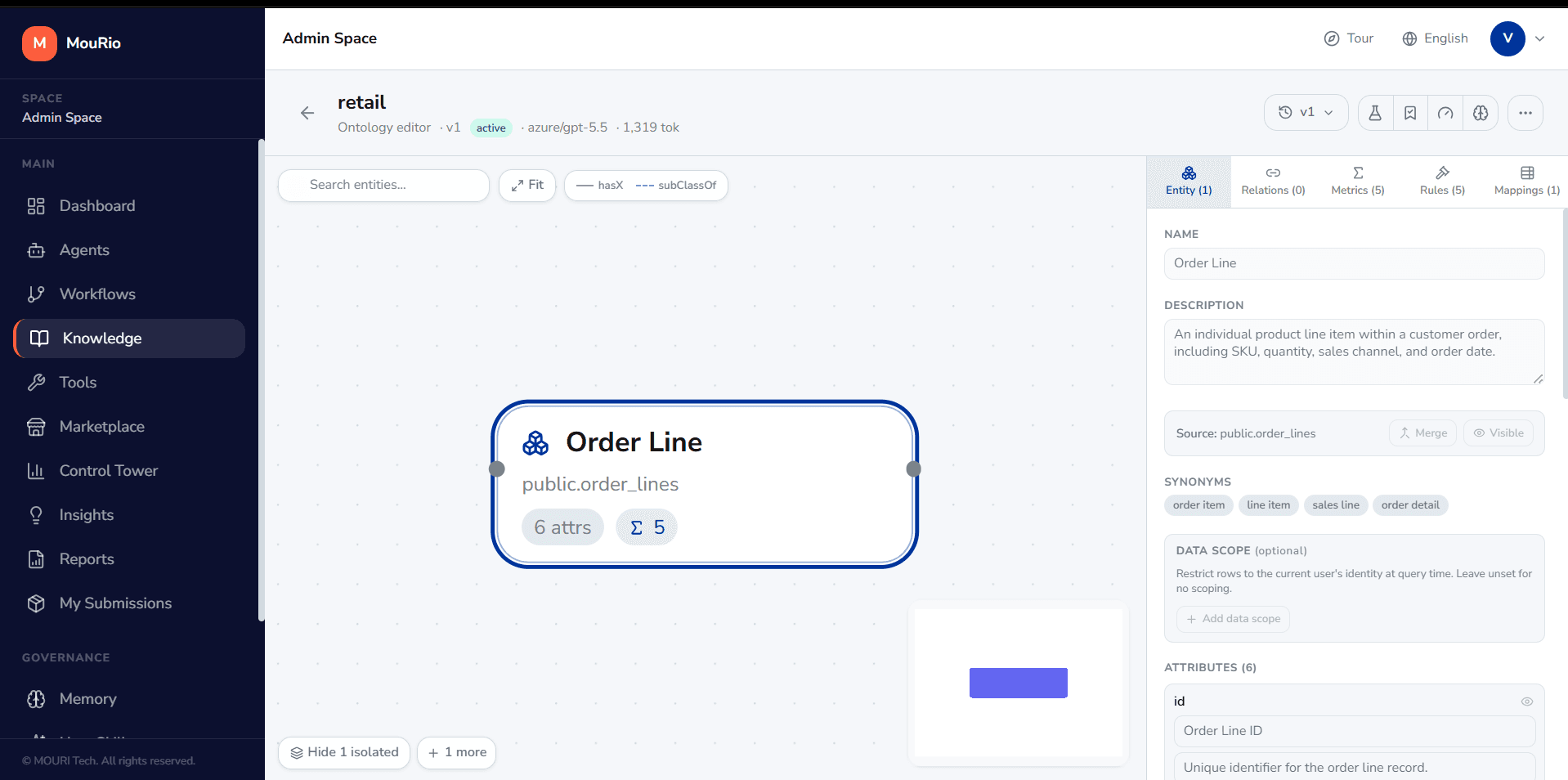
Data Ontology
Shared, governed meaning for enterprise data.
Agents reason better when 'customer', 'work order' and 'invoice' mean the same thing everywhere. The ontology maps entities, relationships and business terms across your systems — scoped to the processes you are automating, and extended as you automate more.
- Entity and relationship mapping across systems
- Business glossary shared by every agent
- Semantic layer over existing systems of record
- No enterprise-wide modelling programme required first
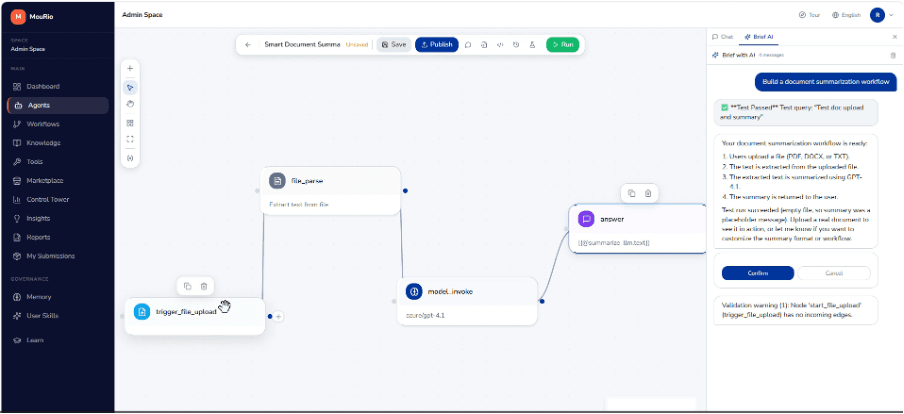
Agent-to-Agent Orchestration
Specialists that hand work off to each other.
Complex processes rarely fit one agent. MouRio sequences specialists across a process, carrying shared context and policy through every handoff, so the agent that drafts a response inherits the constraints of the one that assessed the risk.
- Multi-agent coordination with shared context
- Cross-agent policy enforcement
- Deterministic routing where it matters, autonomy where it helps
- Independent steps run in parallel — wall-clock is the longest path, not the sum
Reusable Skills
A useful conversation becomes a repeatable asset.
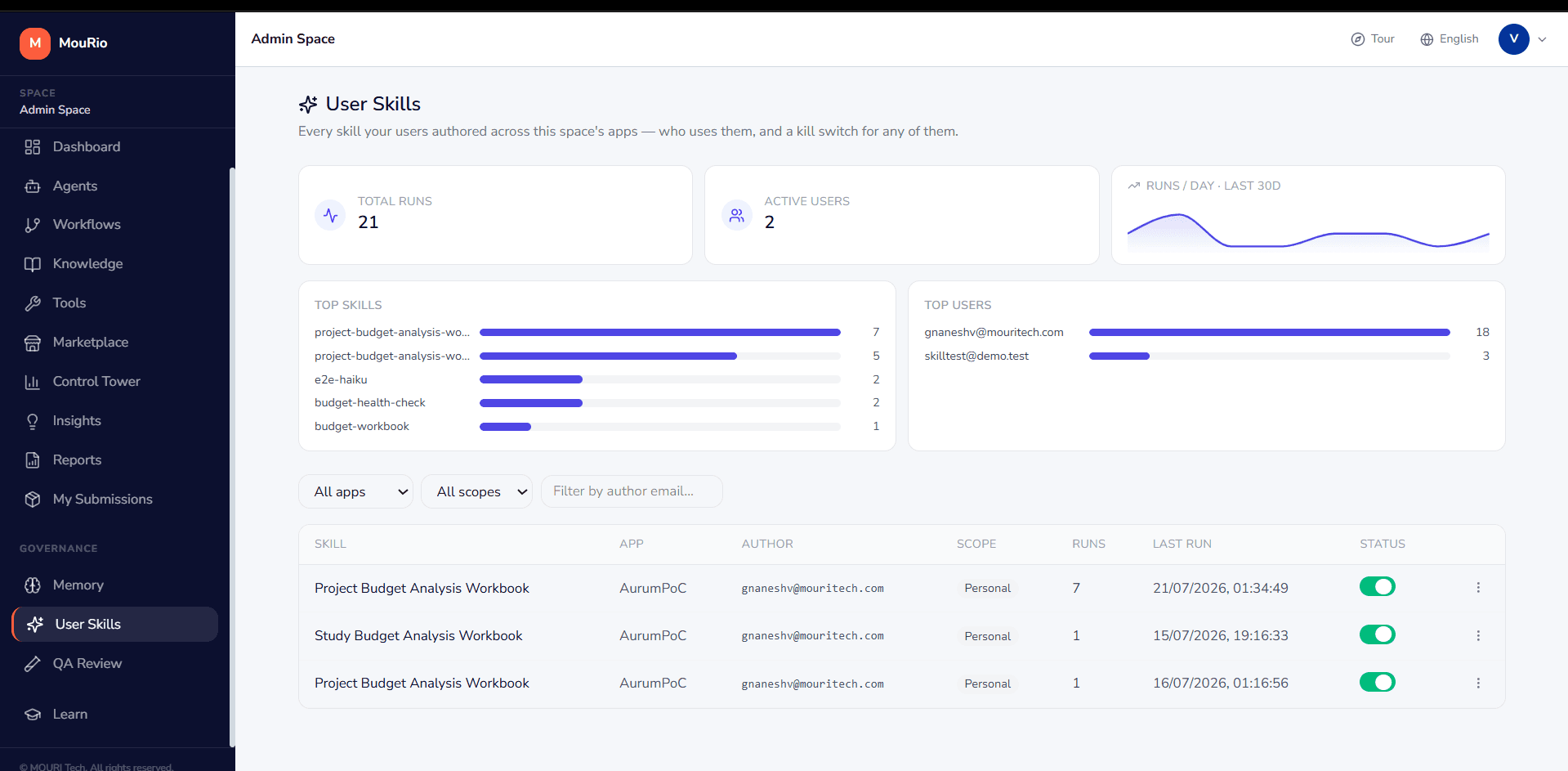
When someone works out how to do something with an agent, that path can be saved as a parameterised skill with an explicit procedure — then rerun on demand, on a schedule, or by another agent. It runs at a fraction of the tokens the original exploration consumed, because the discovery has already happened.
- Save an exploratory conversation as a named, reusable skill
- Explicit procedure, editable and reviewable
- Reruns at roughly 12% of the tokens the original conversation used
- Version history and run history per skill
Publish & Channels
One governed agent, four surfaces.
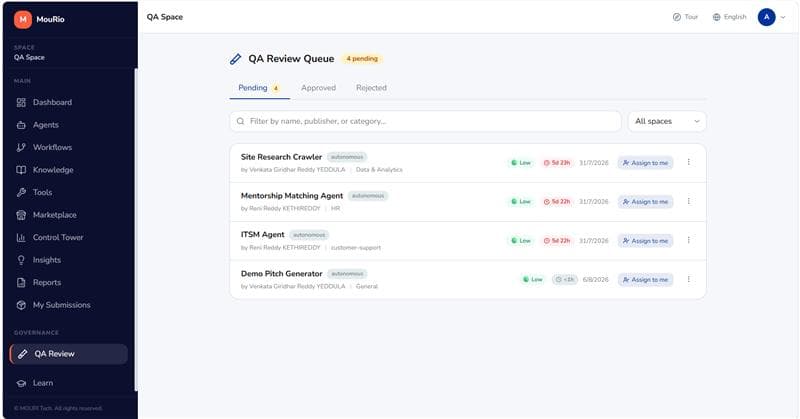
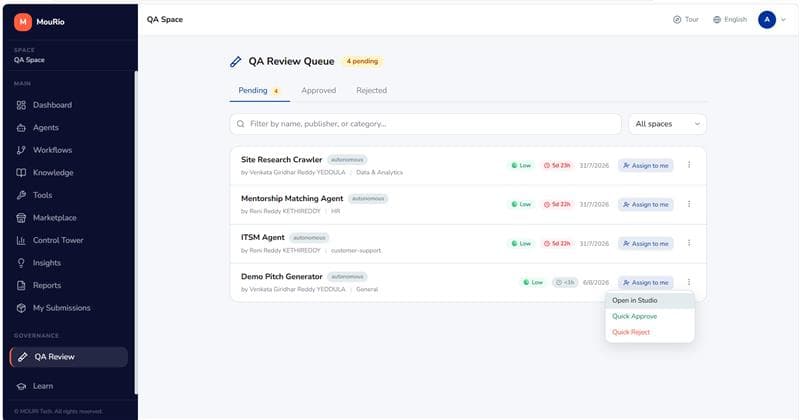
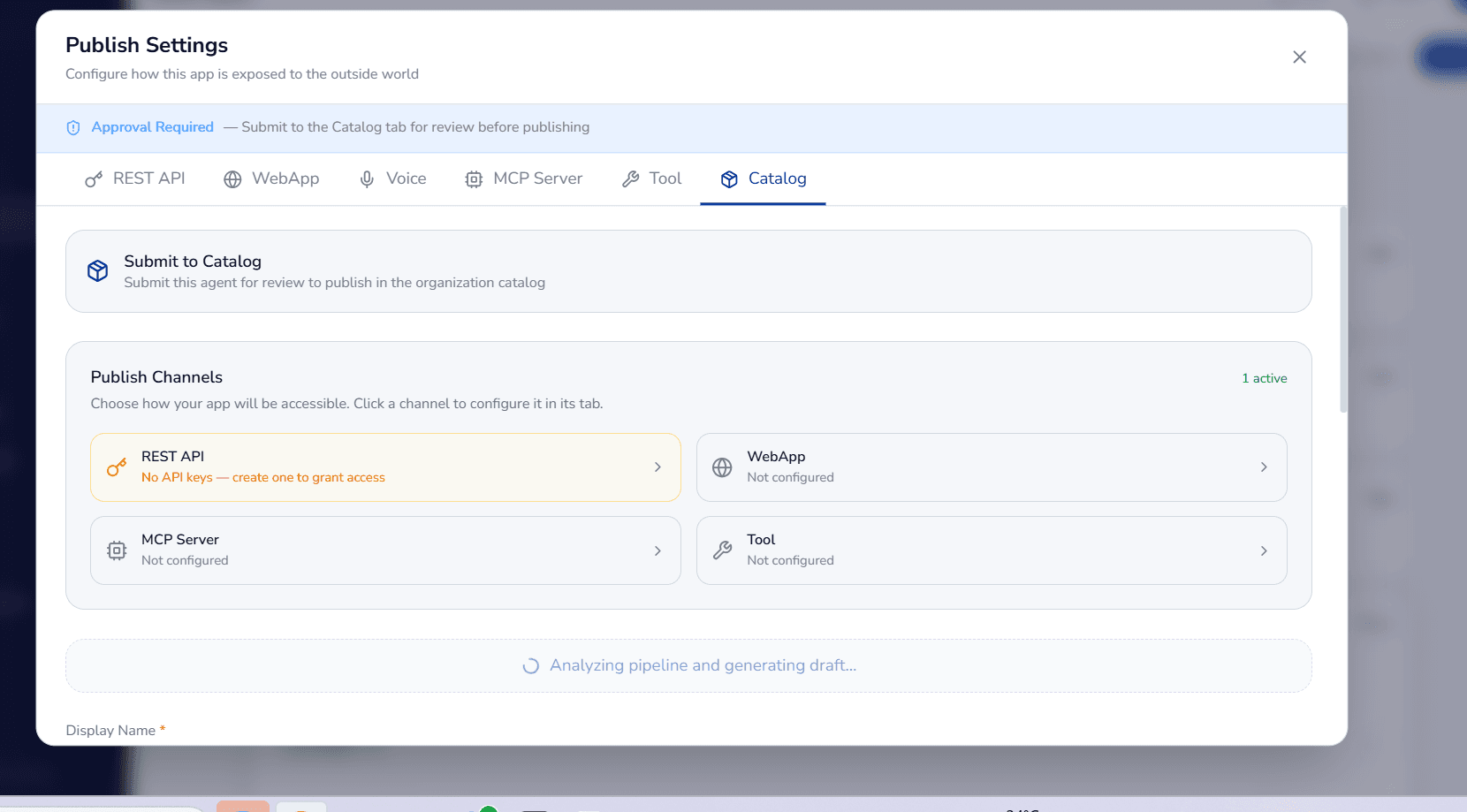
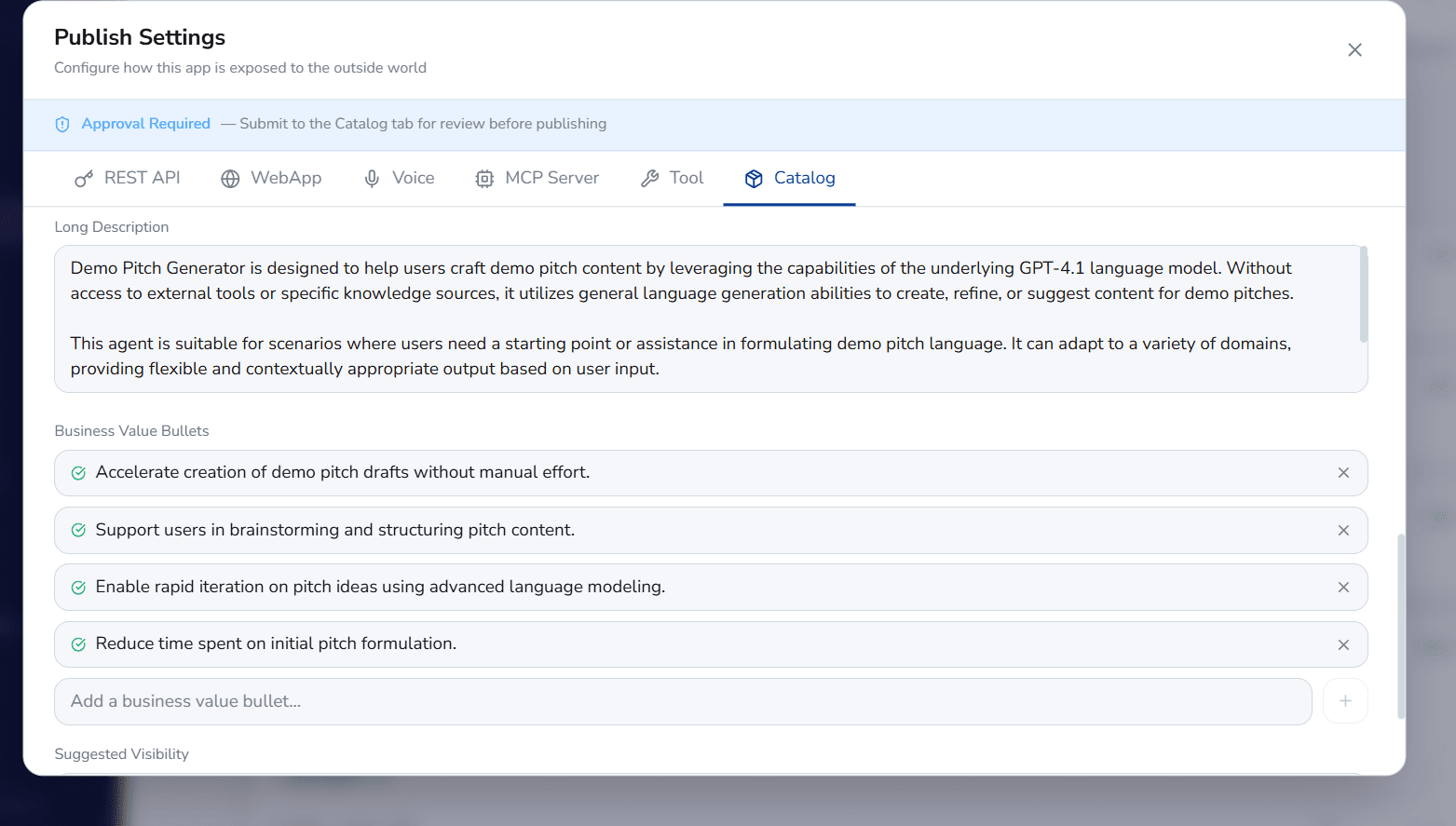
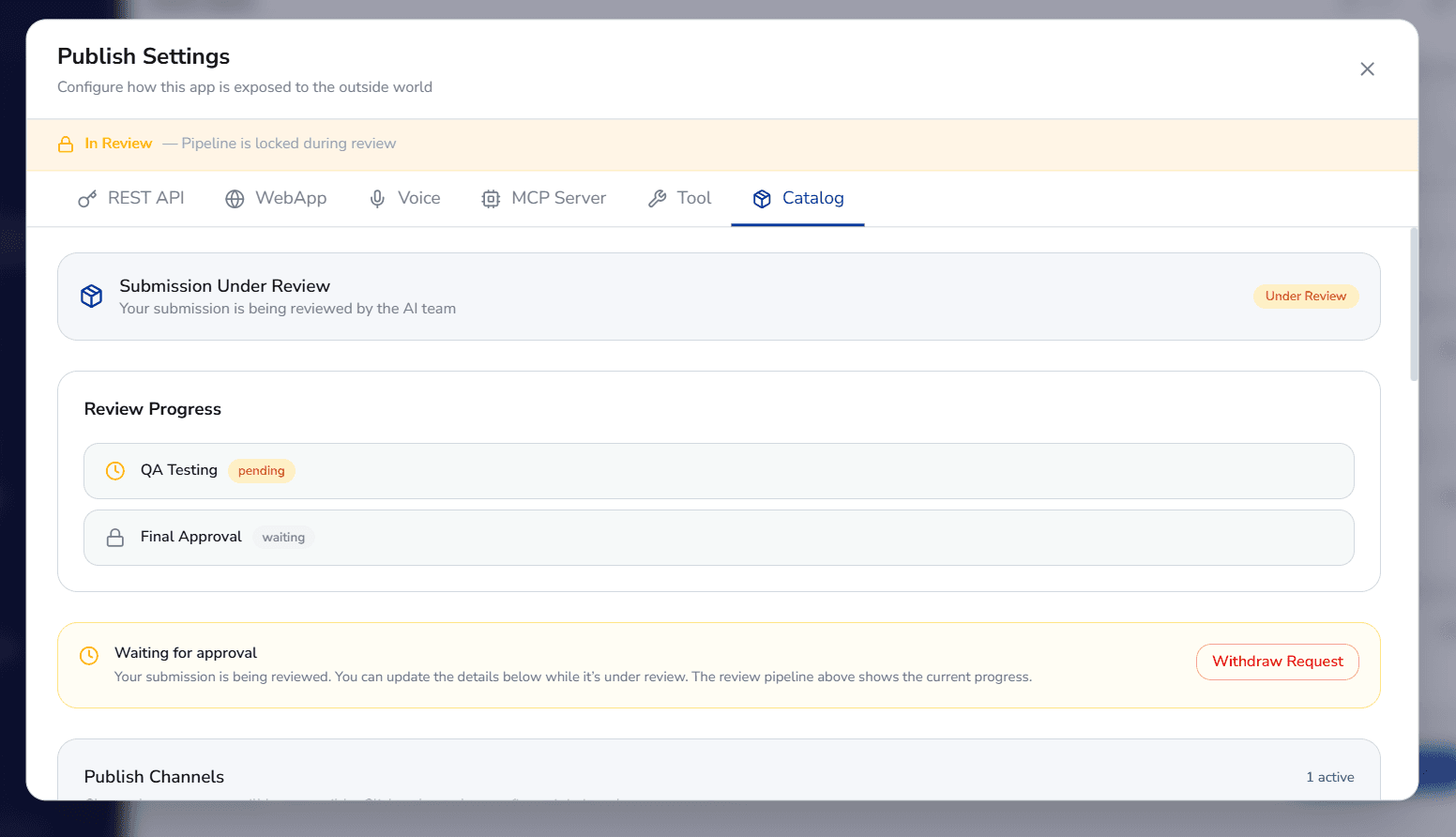
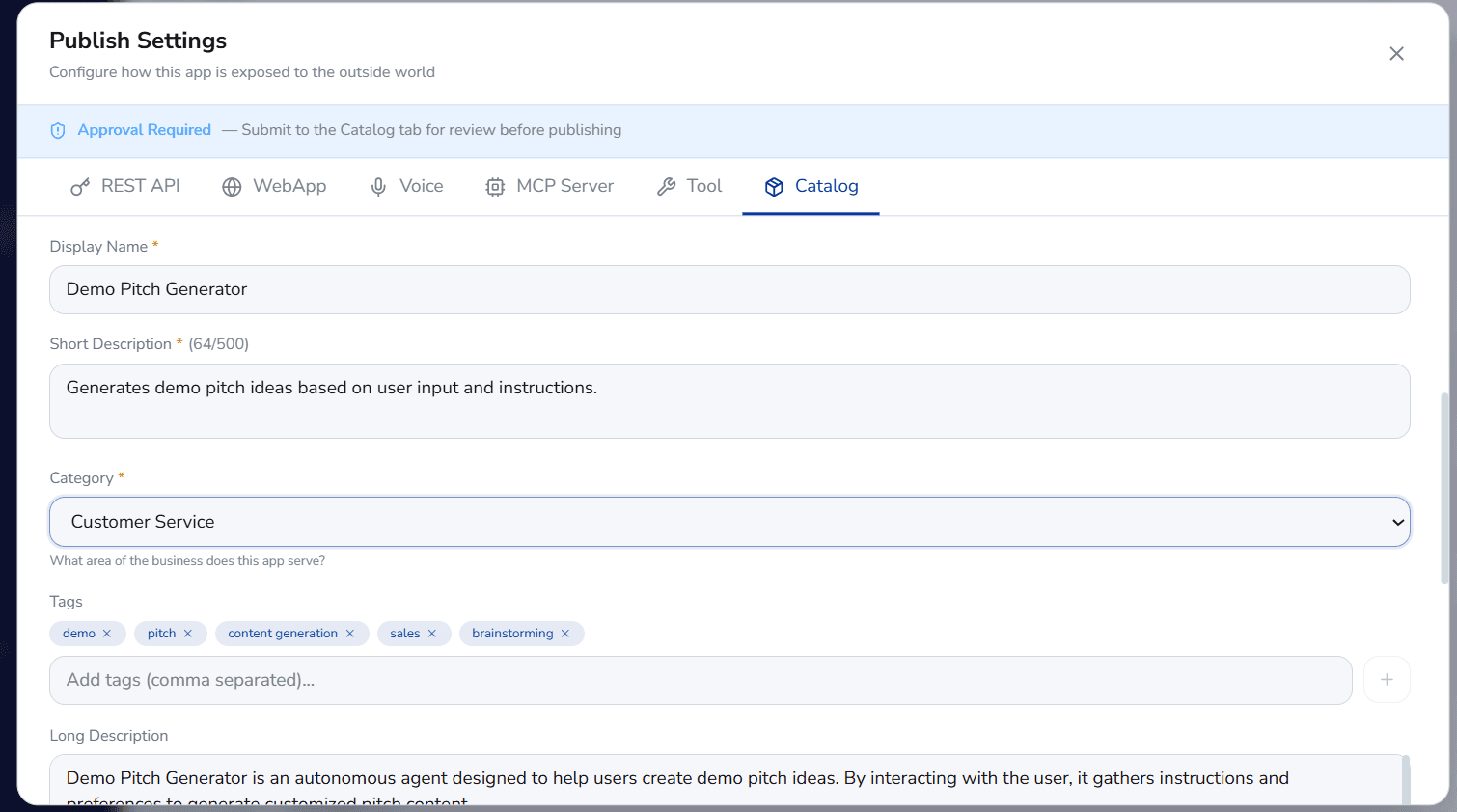
A validated agent is published rather than rebuilt: as an API for another system to call, as a web app for people to use, as an MCP endpoint for other agents and tools, or as a realtime voice channel. The same policy pack, the same audit trail and the same registry entry apply to every surface — publishing does not create a second, ungoverned copy.
- REST API for system-to-system use
- Hosted web app for people
- MCP endpoint so other agents and tools can call it
- Realtime voice, served from inside your own network
- One policy pack and one audit trail across every channel
Knowledge & Retrieval
Answers grounded in your documents, with citations that open.
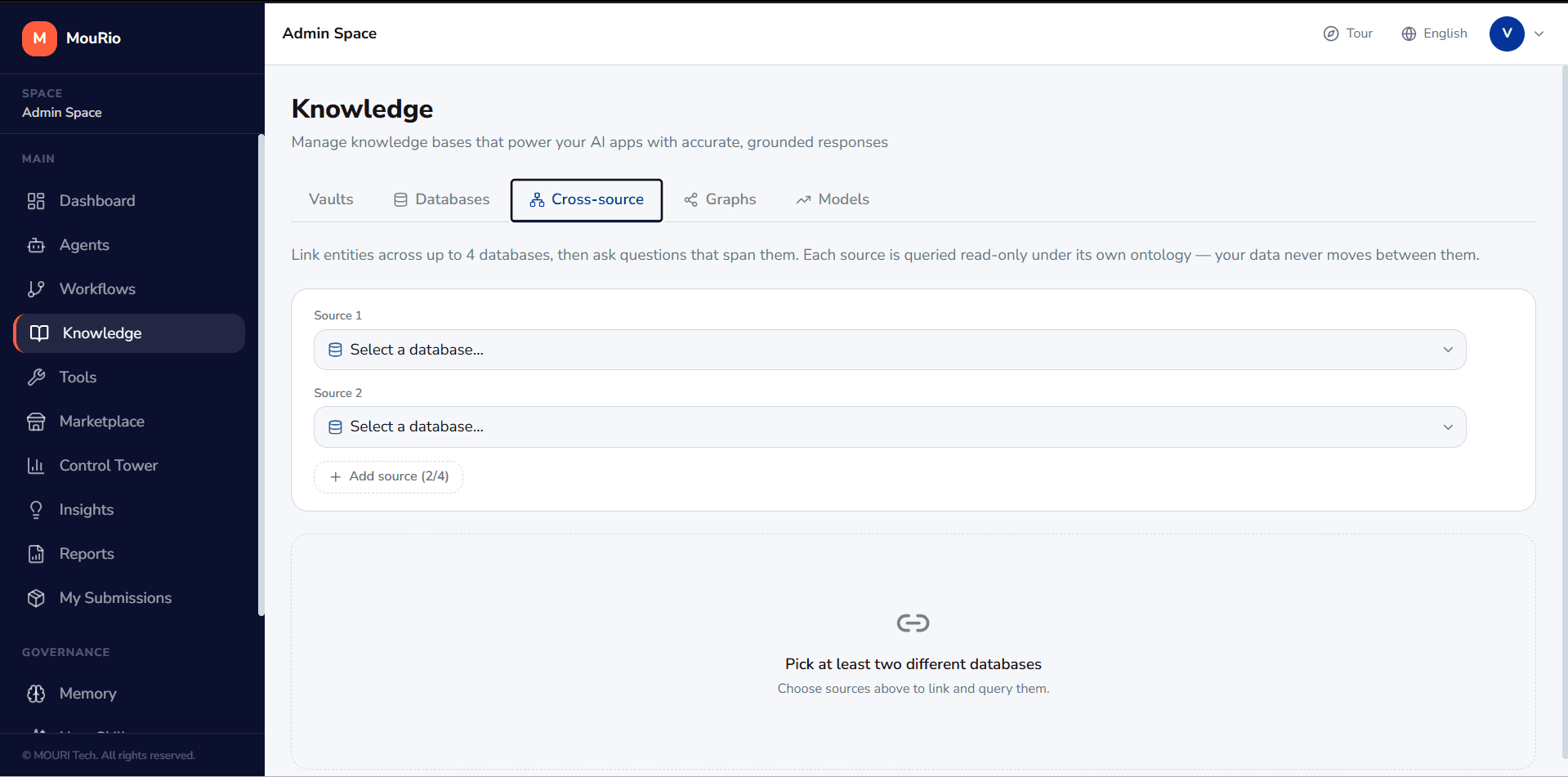
Governed vaults over your documents, SharePoint, Box, Salesforce, Snowflake and search indexes. Retrieved context is recorded in the run's lineage, and citations resolve back to the exact source — the page of the PDF, not just the file name.
- Connectors to enterprise systems of record
- Citations that open at the originating page
- Vault-level embedding model locking to prevent silent corruption
- Per-space isolation of documents and credentials
Deployment
Wherever your data already lives
MouRio is installed in your Azure, AWS or GCP subscription, your VPC, or your own data centre — including fully disconnected environments where nothing egresses at all. Identity comes from Entra ID or your own IdP, and encryption keys stay under your control.
Your infrastructure
Deployed as containers into your subscription. Data residency, network boundaries and key management remain yours.
Your identity
Entra ID, Okta or any OIDC provider. Space-scoped roles keep teams isolated from each other's agents and credentials.
Your models
Azure OpenAI, OpenAI, Anthropic, Bedrock, Vertex, or open-weight models you host. Route per workload and change your mind later.
Bring us the process nobody wants to own.
The one with the exception queue, the spreadsheet nobody documents, and the person who is the only one who knows how it works. We will map it, show you where governed AI fits, and tell you honestly if it does not.